The Dawn of Intelligent Healthcare
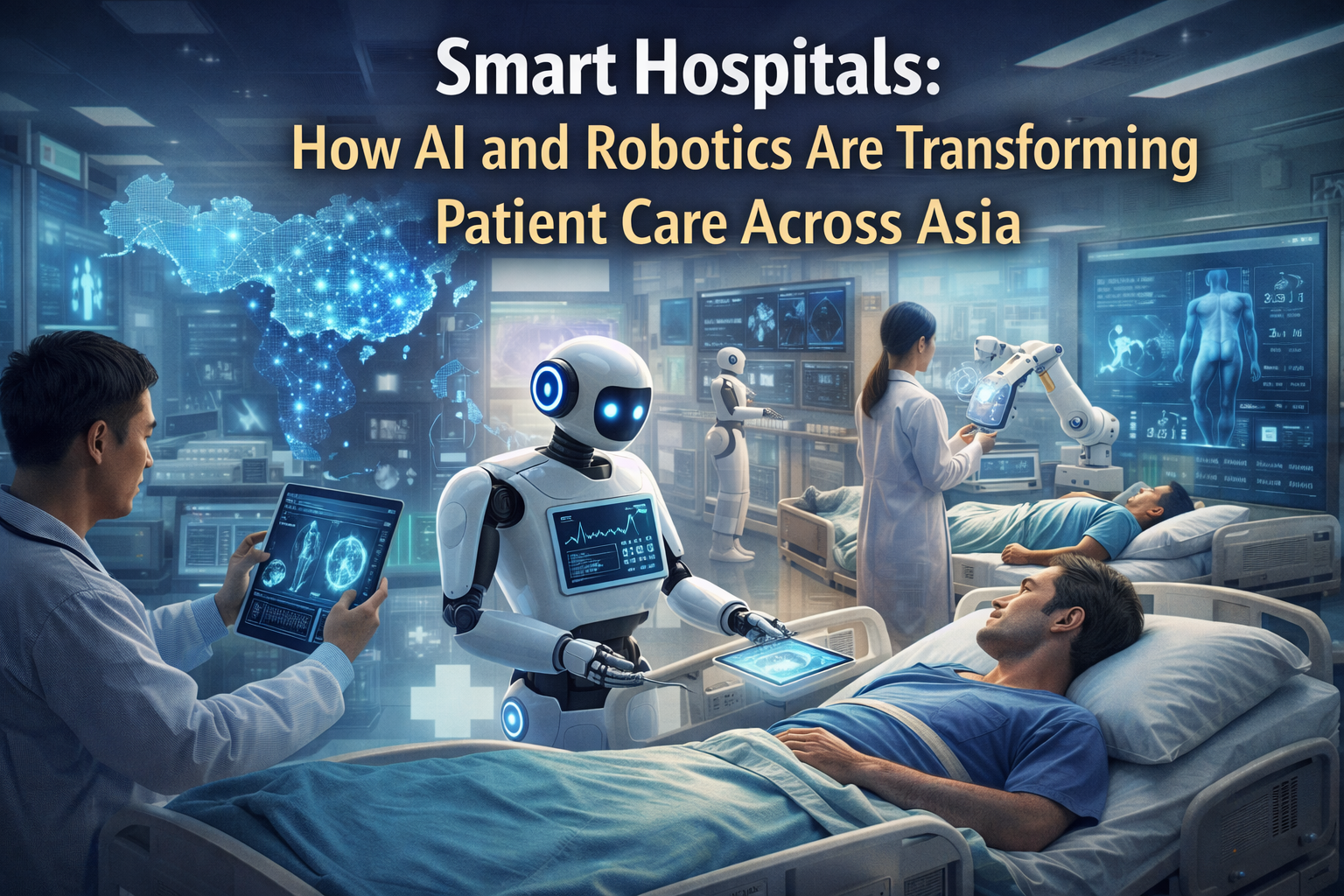
Asia is rapidly emerging as the global epicenter of smart hospital innovation. From Tokyo to Singapore, Seoul to Shenzhen, hospitals across the continent are deploying artificial intelligence and robotics at an unprecedented scale, fundamentally reshaping how patients are diagnosed, treated, and monitored. What was once the domain of science fiction is now a clinical reality — and Asia is leading the charge.
Driven by aging populations, rising chronic disease burdens, acute workforce shortages, and ambitious government digital strategies, Asian nations are investing billions into healthcare technologies that promise faster diagnoses, fewer medical errors, and more personalized treatment. The result is a new generation of hospitals where algorithms assist surgeons, robots deliver medications, and predictive analytics catch life-threatening conditions before symptoms even appear.
AI-Powered Diagnostics: Catching What the Human Eye Misses
One of the most transformative applications of artificial intelligence in Asian hospitals is in medical imaging and diagnostics. Deep learning algorithms trained on millions of scans can now detect cancers, cardiovascular abnormalities, and neurological conditions with remarkable accuracy, often matching or surpassing the performance of experienced radiologists.
In China, hospitals affiliated with major research institutions have deployed AI systems that screen chest X-rays and CT scans for early-stage lung cancer, a disease that claims hundreds of thousands of lives across Asia each year. These systems analyze images in seconds, flagging suspicious nodules and prioritizing urgent cases for human review. In a country where the ratio of radiologists to patients is far below Western standards, this technology is not a luxury — it is a necessity that extends specialist-level care to underserved rural populations.
South Korea has emerged as another frontrunner. Seoul-based hospitals use AI-driven pathology tools that analyze tissue samples at a cellular level, identifying patterns invisible to the naked eye. These tools are accelerating cancer diagnoses and helping oncologists select the most effective treatment protocols based on a tumor’s unique molecular profile.
In India, where diabetic retinopathy threatens the vision of millions, AI-powered retinal screening programs are being rolled out in community clinics. Patients simply sit before a fundus camera, and within minutes an algorithm determines whether they need specialist referral — a process that previously required weeks of waiting and long-distance travel.
Robots on the Ward: From Surgery to Service
Robotic technology is reshaping both the operating theater and the hospital floor across Asia. Surgical robots, guided by AI-enhanced precision, are enabling minimally invasive procedures that reduce recovery times, lower infection risks, and improve outcomes for patients undergoing complex operations.
Japan, facing one of the world’s most severe demographic challenges with its rapidly aging population, has embraced robotics with particular urgency. Japanese hospitals deploy robotic systems not only in surgery but throughout the care continuum. Autonomous robots transport medications, linens, and laboratory samples through hospital corridors, freeing nursing staff to focus on direct patient care. Companion robots engage elderly patients in cognitive exercises, monitor their emotional states, and alert caregivers to signs of depression or cognitive decline.
Singapore’s public hospital system has integrated robotic pharmacy dispensing units that prepare and package medications with near-zero error rates, eliminating a category of preventable harm that has long plagued healthcare institutions worldwide. Rehabilitation robots assist stroke patients in regaining mobility through repetitive, precisely calibrated exercises that would be physically exhausting for human therapists to deliver over extended sessions.
In Thailand, which has positioned itself as a medical tourism hub, private hospitals use surgical robots and AI-assisted treatment planning as competitive differentiators, attracting international patients seeking cutting-edge care at a fraction of Western costs.
Predictive Analytics and Personalized Medicine
Beyond diagnostics and robotics, Asian smart hospitals are harnessing the power of big data and predictive analytics to shift healthcare from a reactive model to a proactive one. By analyzing vast datasets — electronic health records, genomic information, wearable device data, and environmental factors — AI systems can identify patients at risk of deterioration and trigger early interventions.
Chinese hospitals have piloted AI systems that predict sepsis onset hours before clinical symptoms manifest, giving physicians a critical window to administer life-saving treatment. South Korean institutions use machine learning models to forecast post-surgical complications, allowing care teams to allocate resources more effectively and personalize recovery plans.
The integration of genomics and AI is also advancing the promise of precision medicine. Hospitals in Japan and Singapore are building genomic databases that, combined with artificial intelligence, enable treatments tailored to an individual’s genetic makeup. Cancer therapies, cardiovascular interventions, and even mental health treatments are becoming increasingly personalized, improving efficacy while reducing adverse side effects.
Challenges on the Road Ahead
Despite the remarkable progress, the transformation is not without significant challenges. Data privacy and cybersecurity concerns loom large as hospitals digitize patient records and connect devices to networked systems. A single breach can expose millions of sensitive health records, and regulatory frameworks across many Asian nations are still catching up with the pace of technological adoption.
The digital divide remains a pressing issue. While flagship urban hospitals in Beijing, Tokyo, and Singapore showcase world-class innovation, rural and underserved communities often lack basic digital infrastructure, reliable internet connectivity, and trained personnel to operate advanced systems. Without deliberate efforts to bridge this gap, smart hospital technologies risk deepening existing health inequities rather than resolving them.
Workforce adaptation presents another hurdle. Doctors, nurses, and allied health professionals need training not just to operate new technologies but to integrate AI recommendations into their clinical judgment. Trust between human practitioners and machine intelligence must be built gradually through transparent algorithms, rigorous validation, and a culture that treats AI as a collaborative tool rather than a replacement.
Ethical questions also demand attention. Algorithmic bias — where AI systems trained on non-representative datasets produce less accurate results for certain populations — can lead to misdiagnoses and unequal care. Ensuring that training data reflects Asia’s extraordinary ethnic, genetic, and demographic diversity is essential to building systems that serve all patients fairly.
A Blueprint for the World
Asia’s smart hospital revolution offers a compelling blueprint for the future of global healthcare. By embracing artificial intelligence and robotics with both ambition and pragmatism, the continent is demonstrating that technology can meaningfully expand access, improve quality, and reduce costs when deployed thoughtfully.
The lessons emerging from Asian hospitals — the importance of government investment, public-private partnerships, workforce development, ethical governance, and equitable access — are universally relevant. As healthcare systems worldwide grapple with rising demand and constrained resources, Asia’s pioneering institutions are proving that the intelligent hospital is not a distant aspiration. It is here, it is working, and it is saving lives.


Be First to Comment