The Silent Threat Within Healing Walls
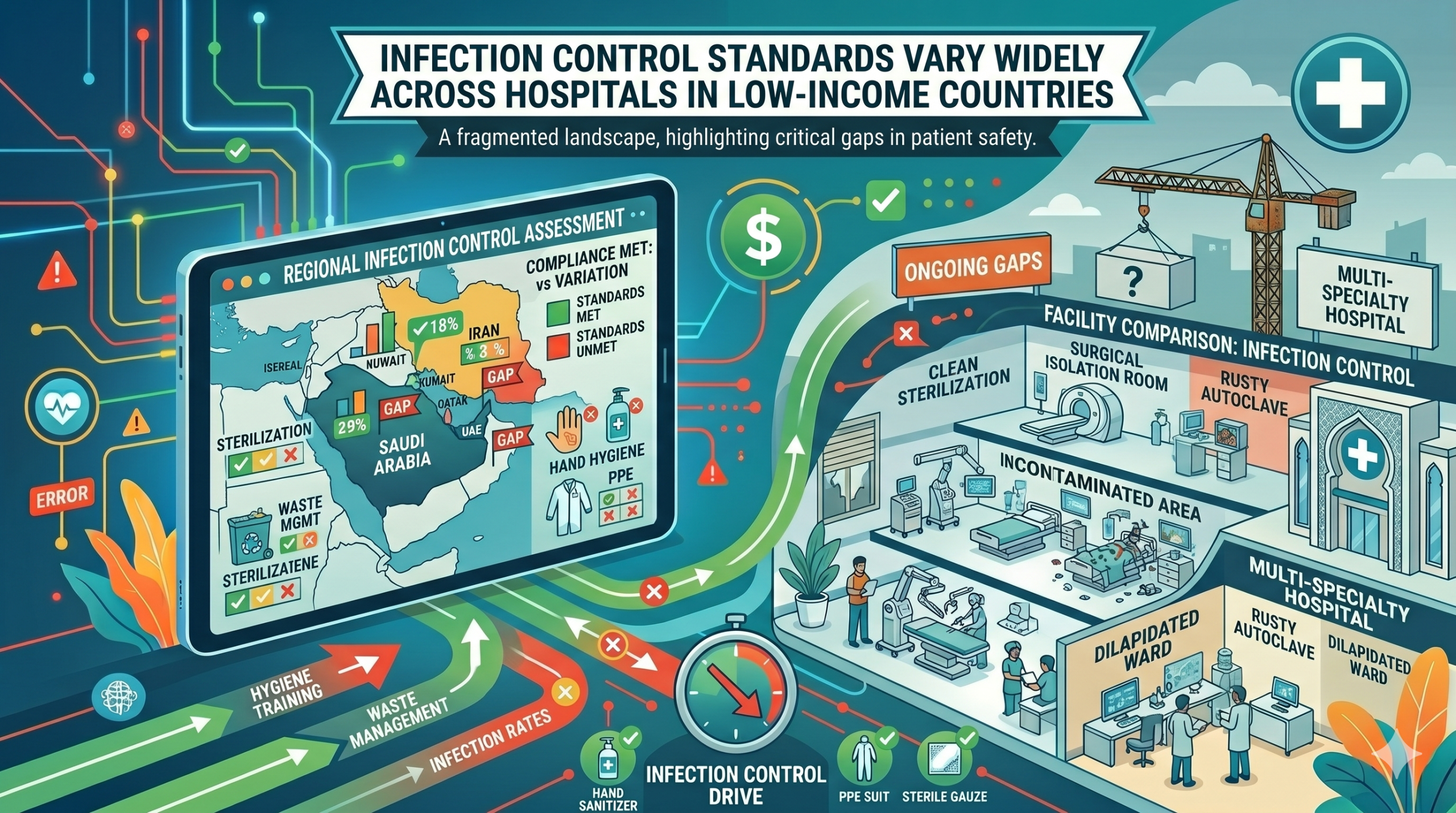
Hospitals are supposed to make people better. Yet across low-income countries, the very institutions designed to treat illness frequently become breeding grounds for new infections — infections that patients did not have when they walked through the door. Hospital-acquired infections, also known as healthcare-associated infections, represent one of the most pervasive and preventable threats to patient safety in the developing world. At the root of this crisis lies a troubling reality: infection control standards vary enormously from one hospital to the next, from one region to the next, and from one country to the next, leaving millions of patients exposed to risks that wealthier nations have largely learned to manage.
The consequences are devastating and measurable. The World Health Organization estimates that healthcare-associated infections affect hundreds of millions of patients worldwide each year, with the burden falling disproportionately on low-income countries where infection rates can be two to twenty times higher than in high-income settings. Surgical site infections, bloodstream infections from contaminated intravenous lines, catheter-associated urinary tract infections, and ventilator-associated pneumonia claim hundreds of thousands of lives annually — deaths that are largely preventable with basic infection control practices that cost a fraction of the treatment they would otherwise demand.
A Patchwork of Protection
In well-resourced hospitals across Europe, North America, and parts of East Asia, infection prevention and control programs are deeply embedded into institutional culture. Dedicated infection control teams monitor compliance with hand hygiene protocols, oversee sterilization processes, track infection rates through surveillance systems, and enforce evidence-based guidelines that govern everything from surgical preparation to waste disposal. These programs are not optional — they are regulatory requirements backed by accreditation standards, government oversight, and legal accountability.
In many low-income countries, this infrastructure simply does not exist. A survey of hospitals across sub-Saharan Africa, South Asia, and parts of Southeast Asia would reveal a patchwork of practices that ranges from competent and committed infection control in a handful of well-supported facilities to near-total absence of basic protective measures in others. The variation is not random — it is driven by systemic factors that compound upon one another to create environments where infections thrive.
Some hospitals maintain functional hand hygiene stations, enforce glove and gown protocols, and operate basic sterilization equipment. Others lack running water at the point of care, reuse single-use medical devices out of necessity, and sterilize surgical instruments with methods that would be considered dangerously inadequate by international standards. Between these extremes lies a vast middle ground of hospitals doing their best with limited resources, inconsistent training, and minimal institutional support.
The Root Causes of Inconsistency
The wide variation in infection control standards across low-income countries reflects a constellation of interconnected challenges that defy simple solutions. Inadequate funding is the most obvious driver. Infection prevention requires sustained investment in supplies — soap, alcohol-based hand rub, disposable gloves, sterile drapes, disinfectants, autoclaves — that must be continuously replenished. When hospital budgets are stretched to breaking point by the costs of medications, salaries, and basic utilities, infection control supplies are among the first casualties of financial triage.
Infrastructure deficits compound the problem. Reliable running water — the most fundamental requirement for hand hygiene — is unavailable in a significant proportion of healthcare facilities in the world’s poorest countries. The WHO has reported that roughly one in four healthcare facilities in least-developed countries lacks basic water services. Without water, hand hygiene compliance becomes physically impossible regardless of how well-trained or motivated the staff may be. Similarly, inconsistent electricity supply undermines sterilization processes, cold chains for sensitive supplies, and the operation of ventilation systems that reduce airborne transmission.
Workforce limitations represent another critical barrier. Many hospitals in low-income countries lack dedicated infection control professionals — the nurses, microbiologists, and epidemiologists who serve as the backbone of prevention programs in wealthier settings. General clinical staff may receive minimal training in infection prevention during their education and little ongoing reinforcement once they enter practice. When a single nurse is responsible for dozens of patients across a crowded ward, the time and attention required for meticulous hand hygiene between each patient encounter becomes an impossible luxury.
Supply chain fragility adds further unpredictability. Even hospitals with adequate budgets and trained staff may experience prolonged stockouts of essential infection control supplies due to procurement failures, transportation disruptions, or import dependencies. A hospital that maintains excellent hand hygiene practices can see its standards collapse overnight when its supply of alcohol-based hand rub runs out and replacement shipments are delayed by weeks.
The Human Cost of Inconsistency
Behind the statistics are individual stories of suffering that infection control failures produce. A mother who delivers her baby in a facility where surgical instruments are inadequately sterilized develops a postpartum infection that turns septic. A child admitted for a fractured limb acquires a drug-resistant bloodstream infection from a contaminated intravenous catheter. An elderly patient recovering from routine surgery contracts a wound infection that prolongs hospitalization by weeks and leaves permanent disability.
The rise of antimicrobial resistance magnifies the danger exponentially. Hospitals with poor infection control become incubators for drug-resistant organisms — superbugs that spread between patients, resist standard treatments, and escape into communities. Low-income countries, where antibiotic stewardship programs are often weak and over-the-counter antibiotic access is common, face a particularly vicious cycle: inadequate infection control drives more infections, more infections drive more antibiotic use, and more antibiotic use accelerates resistance, making the infections that do occur progressively harder to treat.
The economic toll extends beyond individual patients. Healthcare-associated infections lengthen hospital stays, increase treatment costs, and consume scarce resources that could be directed toward other health priorities. For families already living on the margins of poverty, the financial burden of an extended hospitalization caused by an avoidable infection can be catastrophic.
What Works and What Is Needed
The most encouraging aspect of the infection control challenge is that the interventions proven to work are neither technologically complex nor inherently expensive. Hand hygiene, proper sterilization, safe injection practices, appropriate use of personal protective equipment, environmental cleaning, and basic surveillance systems form the foundation of infection prevention worldwide. These measures do not require cutting-edge technology — they require consistent implementation, institutional commitment, and adequate supplies.
Several low-income countries have demonstrated that meaningful progress is achievable. Targeted programs in East African hospitals have shown that structured training, local production of alcohol-based hand rub, and simple visual reminders can dramatically improve hand hygiene compliance rates. National infection control policies adopted in countries like Uganda, Tanzania, and Cambodia have established frameworks that, while imperfectly implemented, represent critical steps toward standardization.
International organizations and non-governmental partners play a vital supportive role through funding, technical assistance, and knowledge transfer. However, sustainable improvement ultimately depends on domestic ownership — governments that prioritize infection control in national health strategies, hospital administrators who champion prevention as a core institutional value, and healthcare workers who internalize hygiene practices as non-negotiable professional standards.
Closing the Gap
The variation in infection control across hospitals in low-income countries is not an inevitable consequence of poverty. It is a reflection of priorities, investments, and systemic choices that can be changed. Every hospital-acquired infection that could have been prevented by a moment of hand hygiene or a properly sterilized instrument represents a failure not of individual caregivers but of the systems that are supposed to support them. Closing the gap requires sustained political will, predictable funding, workforce investment, and a fundamental recognition that infection prevention is not a luxury reserved for wealthy healthcare systems — it is a basic right of every patient who entrusts their body to a hospital’s care.




Be First to Comment